When the United States decides to go to war, two costs are weighed: blood and treasure.
Blood is paid by those who serve. Treasure is paid by the nation. At least, that is how it is supposed to work.
In February, the Department of Veterans Affairs quietly attempted to change that balance.
On February 11, the VA implemented a rule known as RIN 2900-AS49, dramatically altering how disability ratings are evaluated. Using emergency authority, the VA bypassed the standard 60-day Congressional review period and skipped advance public comment altogether. While enforcement of the rule was paused on February 19, the substance of the policy remains intact and deeply concerning.
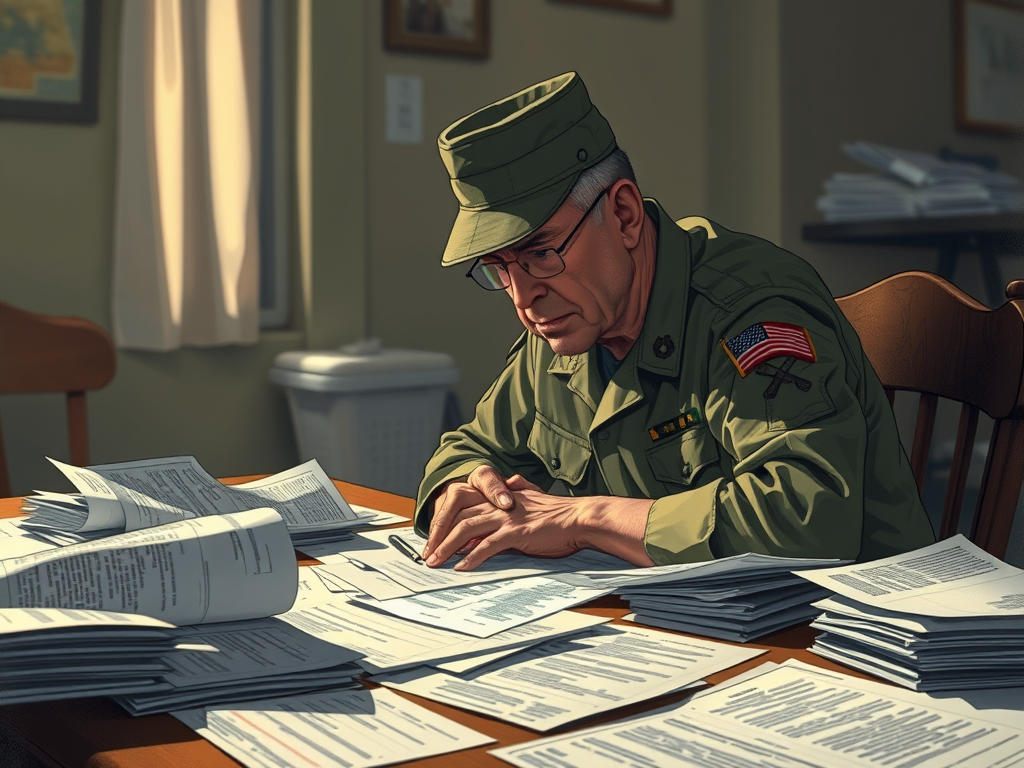
At its core, the rule changes how service-connected disabilities are measured. Instead of evaluating the severity of a condition itself, the VA would rate Veterans based on how they function while medicated or treated. If medication suppresses symptoms, the disability rating may be lowered accordingly.
This may sound reasonable on paper. In reality, it places millions of Veterans at risk.
According to the VA’s 2024 Annual Benefits Report, nearly six million Veterans receive disability compensation, with an average of almost seven service-connected disabilities per Veteran. More than 4.4 million of them, those rated between 0% and 90%, are subject to routine reexaminations every 18 to 30 months. Under the new standard, those reexaminations become moments of real financial jeopardy.
A reduced rating does not simply mean a smaller monthly check. It can mean the loss of health care priority, housing benefits, education assistance, property tax exemptions, and survivor protections. Even Veterans rated Permanent and Total, long understood to be protected from reductions, may find their files reopened if they file a new claim.
This uncertainty is not accidental. The VA’s own Regulatory Impact Analysis projects $23.2 billion in savings over ten years, most of it coming from reduced benefit payments. These are not savings achieved through efficiency or fraud prevention. They are savings achieved by shifting costs onto disabled Veterans.
The broader context matters. Public understanding of military service and its long-term consequences has eroded. Too many Americans dismiss PTSD as weakness or assume Veterans living on benefits are exploiting the system. That ignorance creates political space for policies that quietly move the goalposts after service has already been rendered.
War is governed by what Abraham Lincoln called “awful arithmetic.” But that arithmetic does not end when the shooting stops. The Department of Defense pays first. The Department of Veterans Affairs pays afterward, not as charity, but as fulfillment of a national obligation.
Veterans have already paid the blood cost. Asking them to absorb more of the treasure cost through regulatory sleight of hand breaks faith with that obligation.
Public comments on RIN 2900-AS49 are open until April 20, 2026. Congress and the VA should not merely revise this rule. They should withdraw it.
A nation that can afford war can afford to care for those who fought it.
Colonel (Retired) Joel T. Gilbert


Leave a Reply